Lost-Wax Bronze Casting.
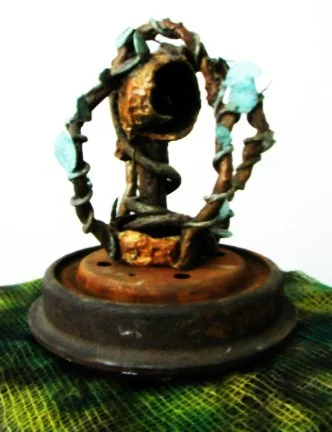
This is the completed bronze cast. It rests on a rusty iron brake‑housing from a vehicle — a found object that turned out to be the perfect base.
Made in 2006, the piece is shaped to resemble two weathered tin cans, with creepers climbing around a plant rising through the base. The patination gives the bronze its rusty oranges and greens, echoing the materials it imitates.
Wax Model — Beginning of the Process
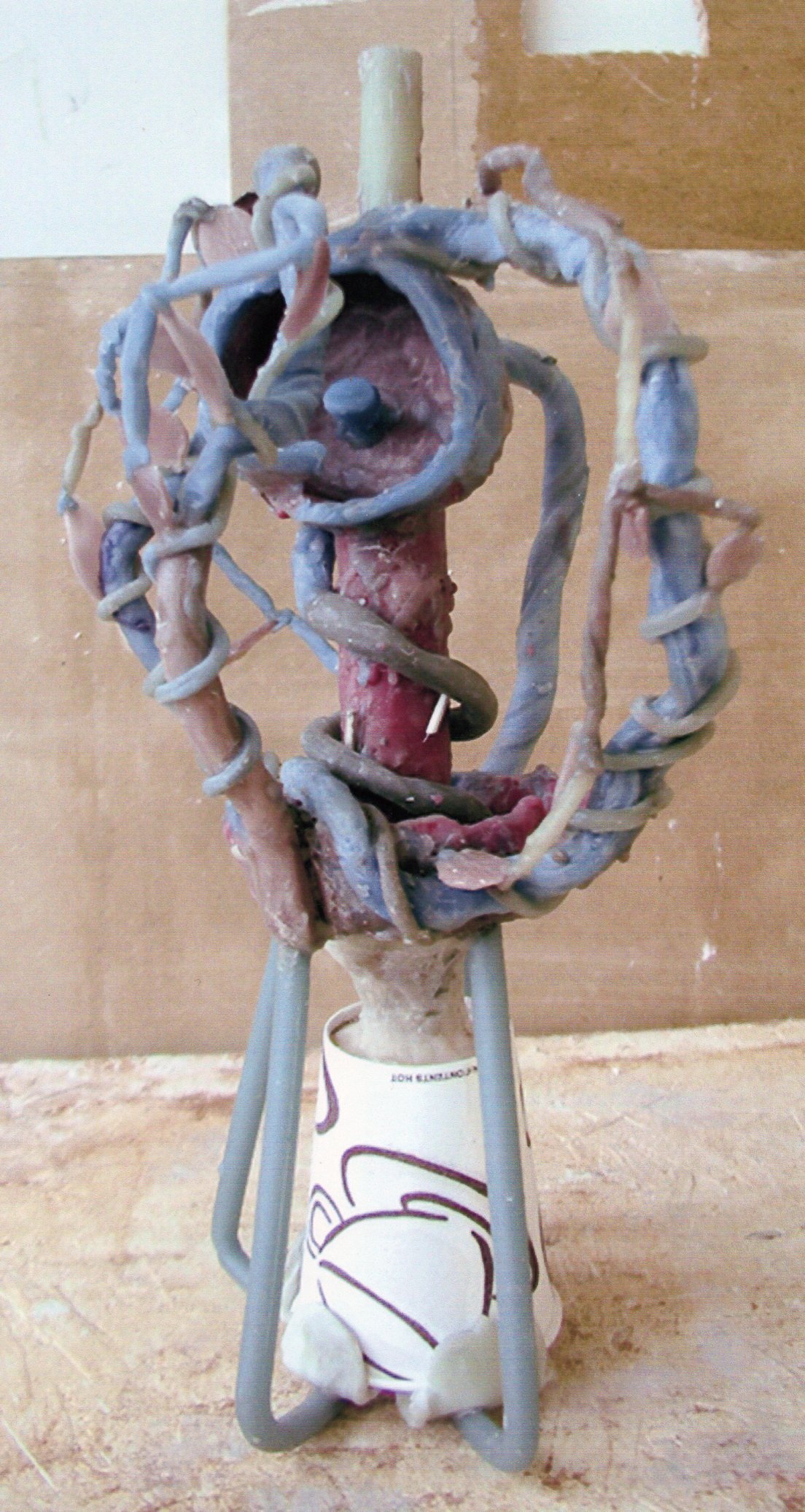
This is the wax model at the very start of the lost‑wax casting process. You can see the cup and sprue system: a plastic cup filled with wax attached to the model, with four wax rods added to create channels for the bronze to flow and for gases to escape.
The whole structure is later encased in plaster‑of‑Paris, which reaches into every small detail to prepare the mould. When the mould is fired, the wax burns away, leaving the hollow spaces needed for the bronze.
The image shows the model upside down; once covered in plaster, it sits right side up so the bronze can be poured into the cup.
Bronze After Initial Clean‑Up
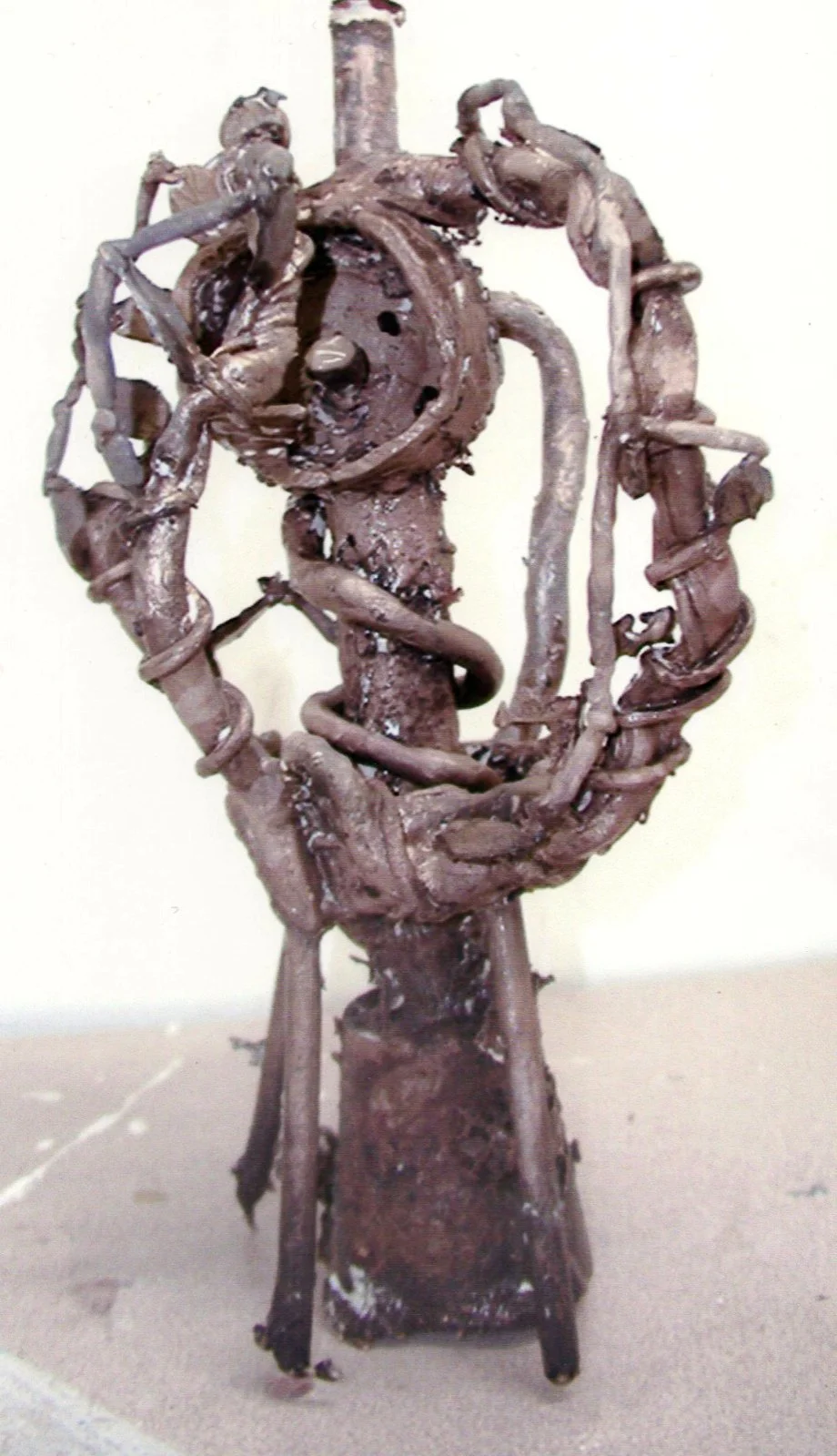
Here’s the bronze after its first clean‑up. Most of the plaster has been removed, and the surface has had an initial scrape with a wire brush.
The bronze sprue is still attached — it connects the points where the wax rods once created air‑escape channels in the plaster mould. At this stage, the sprue also acts as a useful stand for the piece.
Bronze Pour — The Most Dangerous Stage
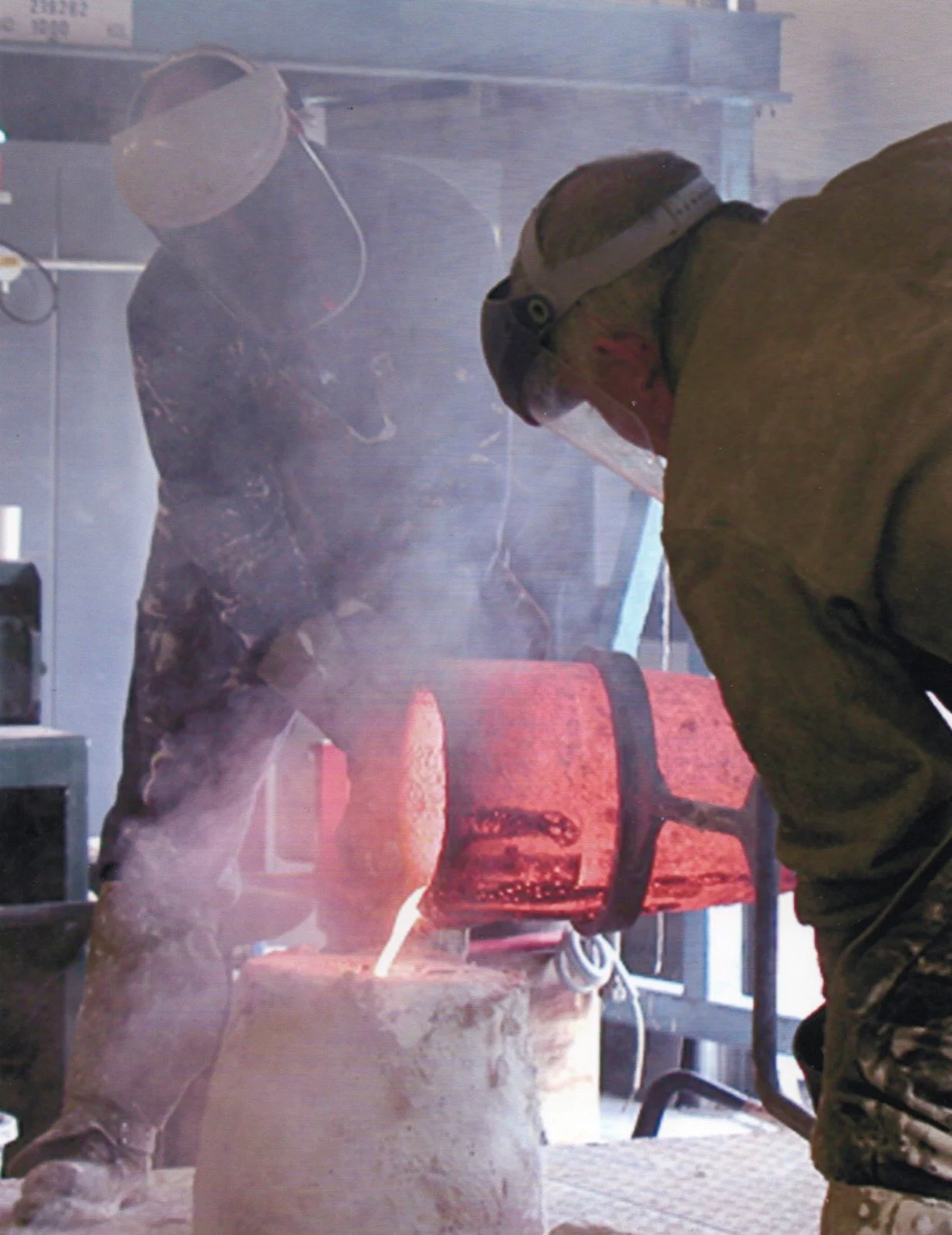
This image shows bronze being poured into the plaster mould built around the wax model. The molten metal enters through the cup and sprue, burning out the remaining wax as it flows. It’s an extremely dangerous part of the process: both men wear layers of heat‑resistant clothing and stand in a sandbox that contains any accidents to the pour area.
The man closest to the viewer is Mark, a University technician. The other is Richard, who worked at a local bronze foundry.
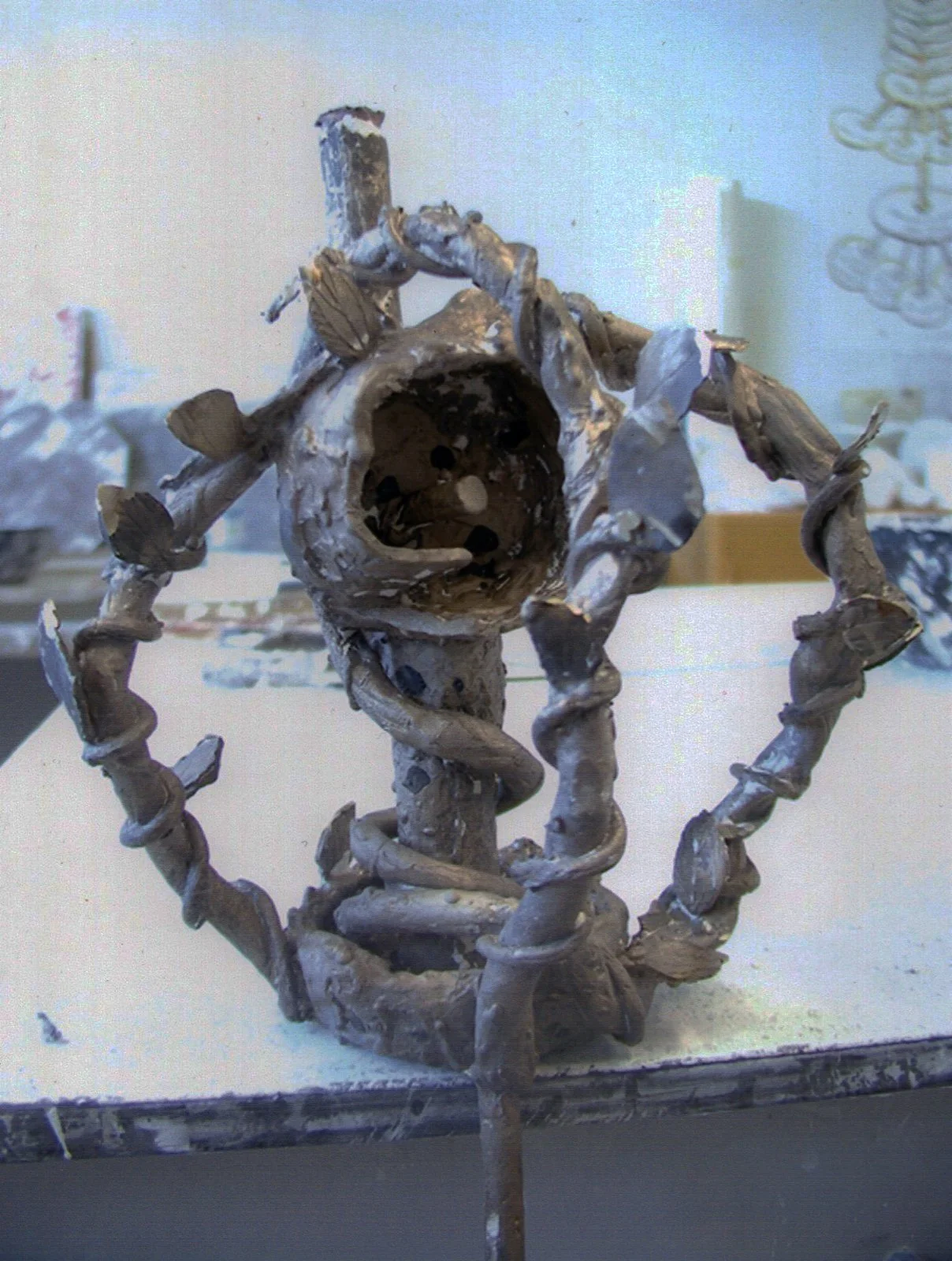
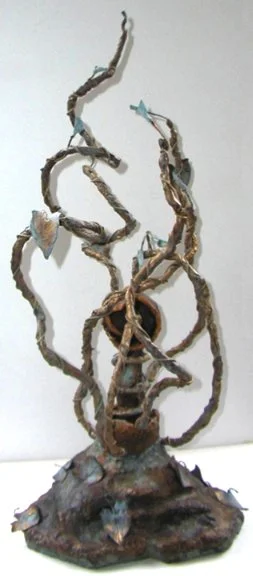
Rusty Cans and Bindweed — Imitation Bronze
The base is wood coated with a builder’s plaster and PVA mixture, giving it a solid, textured surface. Rope and string, painted with acrylic, form the bindweed stems. The cans were made from card, the pole from a cardboard tube, and the leaves were cut from cloth and painted with acrylic.
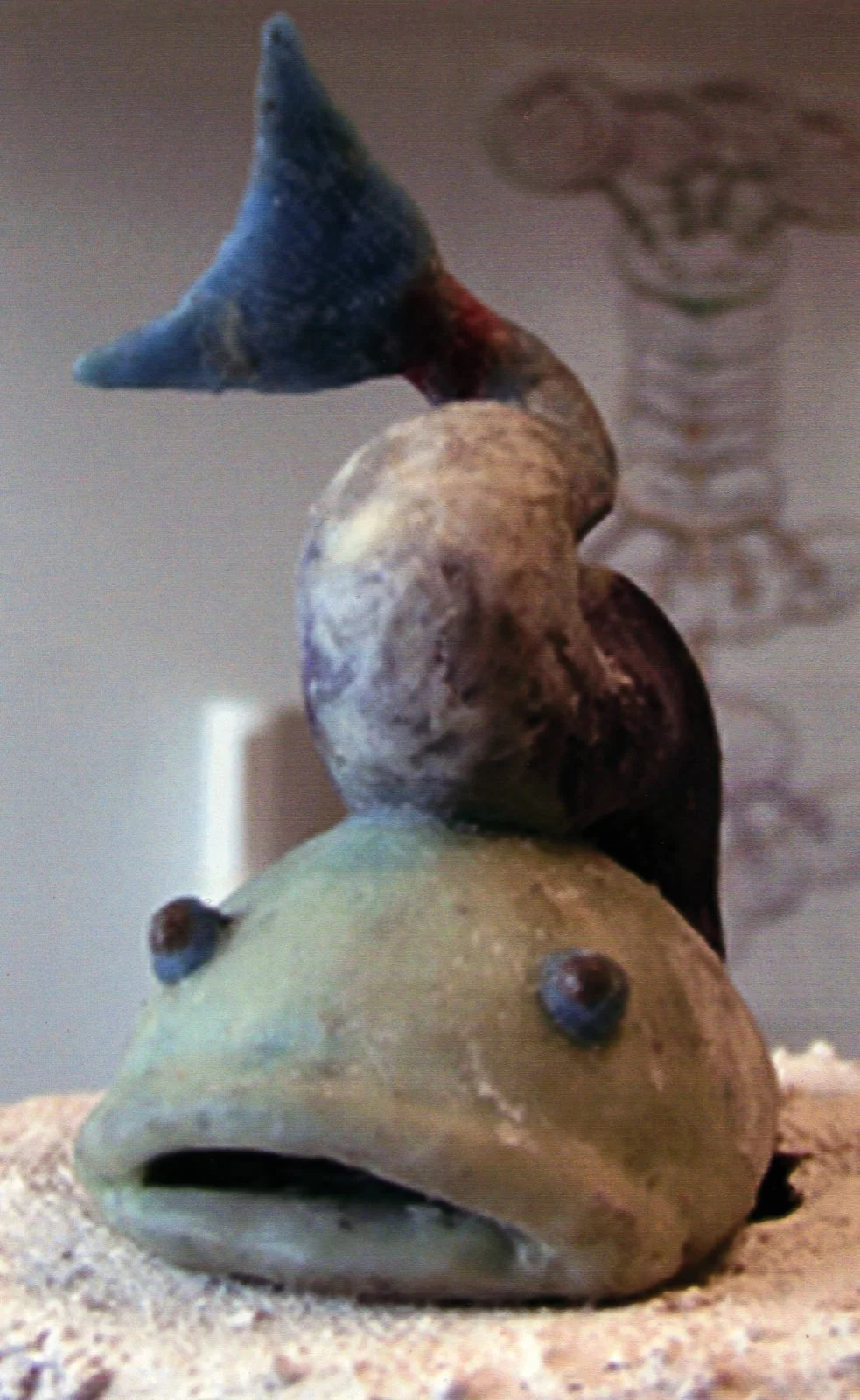
Sprue Removed — Further Cleaning
Here, the sprue and three of the filled air‑escape holes have been removed. The fourth was left in place so the piece could be held securely in a vice for further cleaning and surface work.
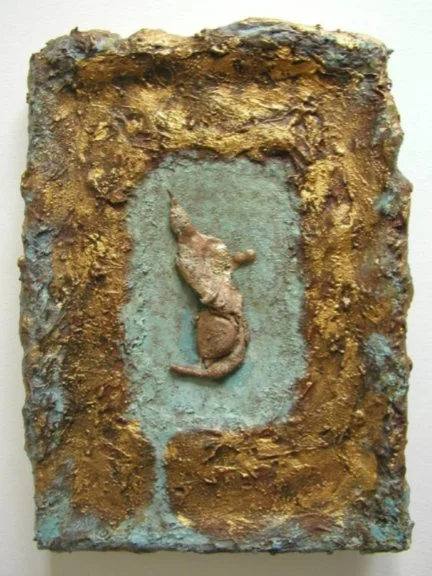
Scrap Bronze — Seahorse Relief
I found a scrap of bronze in the sandbox where the pour takes place. Its shape reminded me of a seahorse, so I decided to do something positive with it. I mounted it on a small picture frame and covered the frame with a mix of plaster and glue, then painted it to resemble patinated, oxidised bronze. The size is 5 1/2” x 7 1/2”
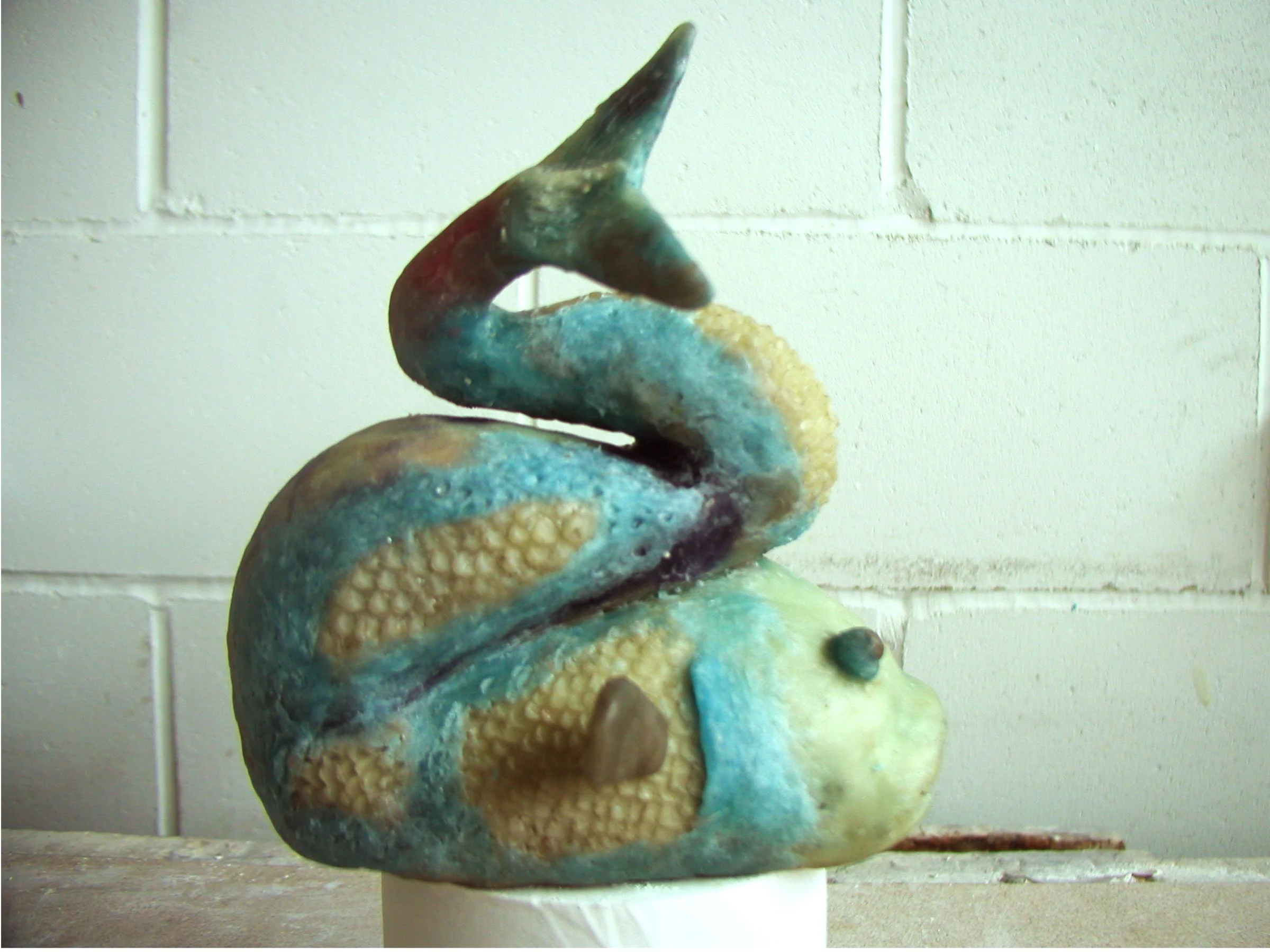
Wax Fish — Front and Side Views
These two images show a wax fish modelled for lost‑wax bronze casting. I never had the opportunity to cast it, and the model no longer exists.